The most common materials used in metal casting include cast iron, carbon steel, stainless steel, alloy steel, aluminum, zinc, magnesium, copper and nickel-based alloys.
Each material offers a different balance of strength, weight, corrosion resistance, castability and cost. The right choice depends on the part geometry, operating environment, production volume and selected casting process.
This guide compares the main metal casting materials and explains where each one is commonly used.
Ferrous and Non-Ferrous Casting Materials
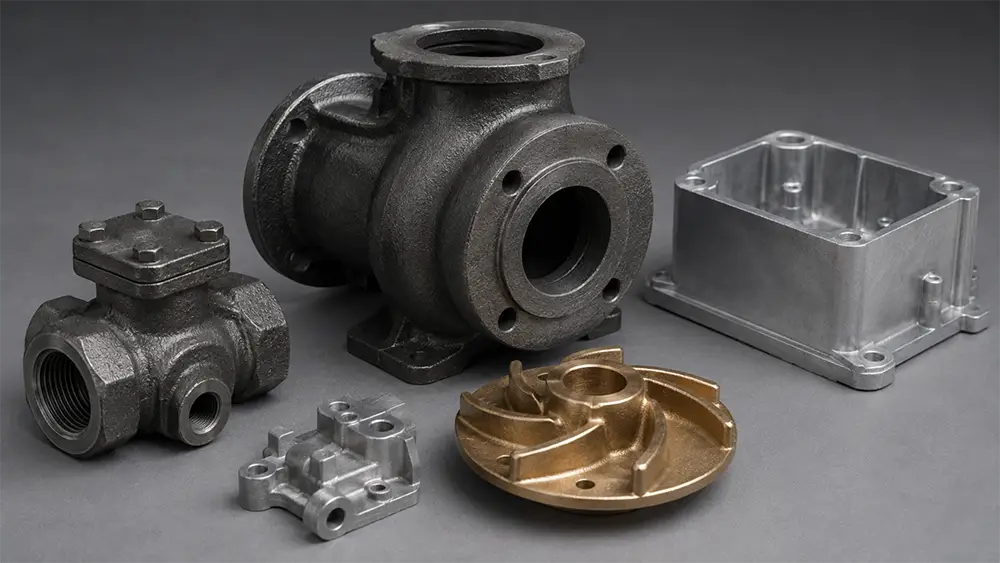
Metal casting materials are generally divided into two groups.
Ferrous materials are primarily based on iron. They include cast iron, carbon steel, stainless steel and alloy steel. These materials are commonly selected for strength, rigidity, wear resistance and heavy-duty industrial applications.
Non-ferrous materials include aluminum, zinc, magnesium, copper and nickel-based alloys. They are often used where low weight, corrosion resistance, conductivity, surface quality or high-temperature performance is required.
Common Materials Used in Metal Casting
Cast Iron
Cast iron is one of the most widely used casting materials because it flows well into molds, is relatively economical and provides good wear resistance and vibration damping.
The main types are gray iron, ductile iron, white iron and malleable iron.
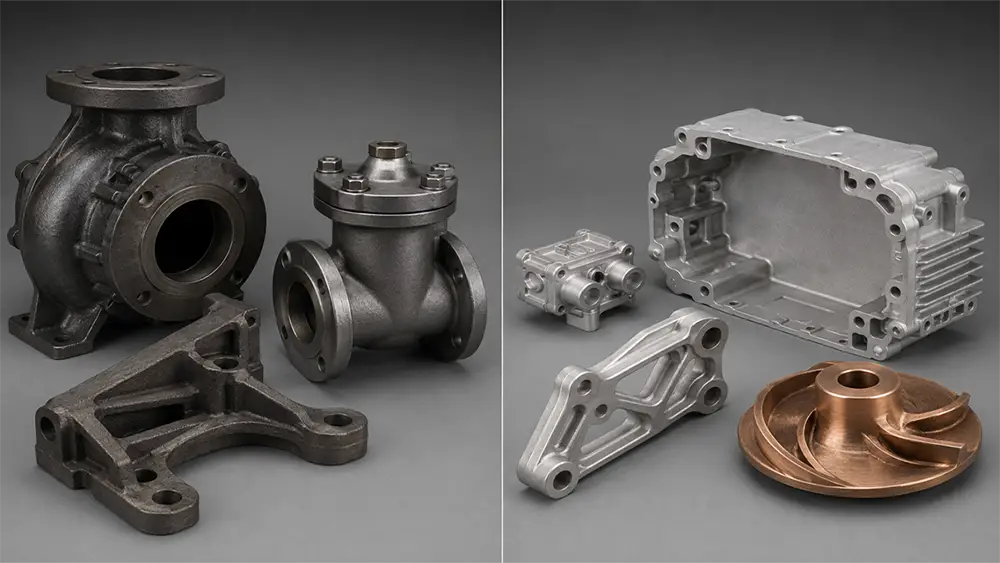
Gray iron is commonly used for machine bases, engine blocks, pump housings and gearboxes. Ductile iron offers better strength and impact resistance, making it suitable for automotive, agricultural and heavy-equipment parts. White iron is mainly used for wear-resistant components, while malleable iron is often used for smaller fittings and brackets.
Cast iron is generally a good choice for medium-to-large industrial parts where weight is less important than stability, wear resistance and cost.
Carbon Steel
Carbon steel castings provide better tensile strength, toughness and impact resistance than most cast irons. They can also be welded and heat-treated to meet demanding mechanical requirements.
Typical applications include mining machinery, railway components, construction equipment, pumps, valves and load-bearing structural parts.
The main disadvantages are higher melting temperatures, more difficult process control and lower natural corrosion resistance than stainless steel.
Carbon steel is suitable when strength and structural reliability are more important than low weight.
Stainless Steel
Stainless steel is selected for components exposed to moisture, chemicals, food-processing conditions or corrosive environments.
Common cast stainless steel parts include valve bodies, pump housings, impellers, marine fittings, medical equipment and chemical-processing components.
Different grades provide different combinations of corrosion resistance, strength, hardness and heat resistance. Austenitic stainless steels are widely used for corrosion resistance, while martensitic and duplex grades may be selected for greater hardness or strength.
Stainless steel costs more than cast iron or carbon steel, but it can reduce the need for protective coatings and frequent replacement.
Alloy Steel
Alloy steel contains elements such as chromium, nickel, molybdenum or manganese to improve specific properties.
Depending on the grade and heat treatment, alloy steel can offer greater hardenability, fatigue resistance, toughness, wear resistance or high-temperature performance.
It is commonly used for mining equipment, heavy gears, railway parts, lifting components and power-generation equipment.
Alloy steel is usually chosen when standard carbon steel cannot meet the required performance.
Aluminum Alloys
Aluminum is one of the most common non-ferrous casting materials. It has low density, good corrosion resistance, good thermal conductivity and excellent compatibility with complex part geometries.
Common applications include automotive housings, transmission components, electronics enclosures, heat sinks, lighting parts and aerospace structures.
Frequently used casting alloys include A356, A357, A380, ADC10 and ADC12. A356 is commonly used in sand and permanent mold casting, while A380 and ADC12 are widely used in high-pressure die casting.
Aluminum is a good option for lightweight components, although some grades lose strength at elevated temperatures.
Zinc Alloys
Zinc alloys are mainly used in high-pressure die casting. They provide excellent fluidity, dimensional accuracy and surface quality.
Common zinc alloys include Zamak 3, Zamak 5, ZA-8 and ZA-12. They are frequently used for connectors, locks, decorative hardware, gears, small housings and precision mechanical components.
Zinc can reproduce fine details and thin walls, while its relatively low casting temperature helps extend die life.
Its main disadvantage is higher density than aluminum or magnesium. Zinc is therefore most suitable for small, detailed parts rather than large lightweight components.
Magnesium Alloys
Magnesium is one of the lightest structural metals used in casting.
It offers a good strength-to-weight ratio, machinability, vibration damping and electromagnetic shielding. Typical applications include automotive brackets, electronic housings, aerospace components and portable equipment.
Common magnesium casting alloys include AZ91D, AM50 and AM60.
Magnesium requires careful melting and oxidation control. It may also need protective coatings in corrosive environments.
It is normally selected when reducing part weight is a major design priority.
Copper Alloys
Copper casting alloys include brass, bronze, aluminum bronze and copper-nickel.
These materials are commonly used for bearings, bushings, valve bodies, marine fittings, propellers, gears and electrical components.
Brass is often used for fittings, valves and decorative hardware. Bronze offers good wear and bearing performance, while copper-nickel alloys are suitable for seawater and marine environments.
Copper alloys are heavier and more expensive than aluminum, but they provide strong corrosion resistance, conductivity and wear performance.
Nickel-Based Alloys
Nickel-based alloys are used in high-temperature and highly corrosive environments where steel or stainless steel may not provide enough protection.
Typical applications include gas turbine parts, furnace hardware, chemical-processing equipment, oil and gas components and high-temperature valves.
These alloys can offer excellent oxidation resistance, creep strength and chemical resistance. However, they are expensive and more difficult to cast and machine.
Investment casting is commonly used for complex nickel-alloy components.
Metal Casting Materials Comparison
| Material | Weight | Main Advantages | Main Limitations | Common Applications |
| Cast Iron | High | Castability, wear resistance, low cost | Heavy, limited ductility | Machine bases, housings, pipes |
| Carbon Steel | High | Strength, toughness, weldability | Low corrosion resistance | Heavy machinery, structural parts |
| Stainless Steel | High | Corrosion and heat resistance | Higher cost | Pumps, valves, food and chemical equipment |
| Alloy Steel | High | Strength, fatigue and wear resistance | More complex processing | Mining, railway and energy parts |
| Aluminum | Low | Lightweight, corrosion resistance, thermal conductivity | Lower high-temperature strength | Automotive, electronics and aerospace |
| Zinc | High | Fine details, accuracy, surface finish | Relatively heavy | Small precision die-cast parts |
| Magnesium | Very Low | Lowest weight, good machinability | Corrosion and process control | Lightweight housings and brackets |
| Copper Alloys | High | Wear resistance, conductivity, marine performance | High cost and weight | Bearings, valves and marine parts |
| Nickel Alloys | High | High-temperature and corrosion resistance | Very high cost | Turbines, furnaces and chemical equipment |
The table provides only a general comparison. Actual performance depends on the alloy grade, heat treatment, casting quality and part design.
Materials for Different Casting Processes
The casting process and material should be selected together.
Sand Casting
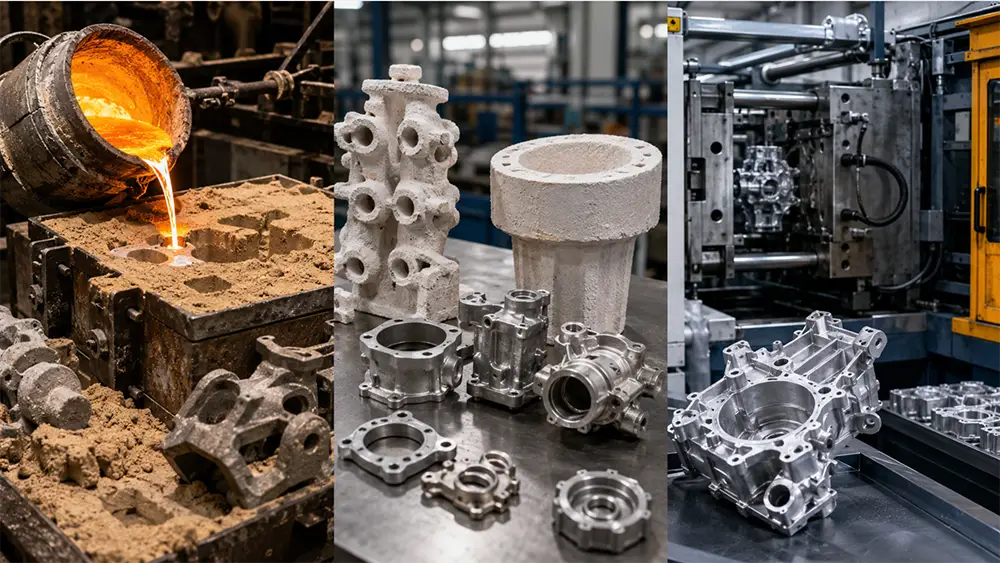
Sand casting can process cast iron, steel, aluminum, brass, bronze and some nickel alloys. It is suitable for large components, complex internal cavities, prototypes and low-to-medium production volumes.
Tooling costs are relatively low, but the process usually provides a rougher surface and requires more machining than die casting.
Investment Casting
Investment casting is commonly used with carbon steel, stainless steel, alloy steel and nickel-based alloys.
It is suitable for complex shapes, fine details and materials that are difficult to machine. Typical applications include aerospace parts, medical instruments, valves and precision industrial components.
Die Casting
High-pressure die casting mainly uses aluminum, zinc and magnesium alloys.
The process is suitable for high-volume production, thin walls, complex geometries and consistent dimensions. Aluminum is preferred for larger lightweight parts, zinc for small detailed components and magnesium for minimum part weight.
Low-Pressure and Permanent Mold Casting
Low-pressure and permanent mold casting are mainly used with aluminum, magnesium and some copper alloys.
These processes generally provide better surface quality and repeatability than sand casting and are commonly used for wheels, housings and structural components.
How to Choose a Metal Casting Material
Material selection should begin with the finished part requirements rather than the raw material price.
First, define the mechanical properties the part needs, including strength, hardness, toughness, fatigue resistance and wear resistance. A machine base may benefit from gray cast iron, while a heavily loaded component may require carbon or alloy steel.
Next, consider weight and operating conditions. Aluminum and magnesium are suitable for lightweight parts. Stainless steel, copper alloys and nickel alloys may be better for corrosive, marine or high-temperature environments.
Part geometry also matters. Zinc and aluminum alloys can fill thin walls and fine details in die casting, while sand casting is more practical for large steel or iron components.
Production volume affects the most economical process. Sand and investment casting are often suitable for prototypes and lower volumes. Permanent mold and low-pressure casting work well for medium volumes, while die casting is usually more economical for high-volume production.
Secondary operations should also be considered. Machining, heat treatment, welding, coating and inspection may have a greater effect on total cost than the raw material itself.
Quick Material Selection Guide
For low-cost machine bases and housings, gray cast iron is often a practical choice. Ductile iron is better where additional strength and impact resistance are required.
Carbon and alloy steels are suitable for heavily loaded structural components. Stainless steel is generally preferred for pumps, valves and parts exposed to chemicals or moisture.
Aluminum is widely used for lightweight automotive and electronics parts. Zinc works well for small precision components, while magnesium is suitable where minimum weight is essential.
Copper alloys are commonly selected for bearings, marine components and conductive parts. Nickel-based alloys are used for extreme heat and aggressive corrosion.
Frequently Asked Questions
What Is the Most Common Material Used in Metal Casting?
Cast iron, steel and aluminum are among the most commonly used casting materials. Cast iron is widespread in industrial machinery, aluminum is common in lightweight components and steel is preferred for high-strength applications.
Can All Metals Be Cast?
Many metals can be cast, but some require specialized molds, protective atmospheres or vacuum equipment. Melting temperature, oxidation, fluidity and shrinkage all affect whether a metal is practical for a particular casting process.
What Materials Are Used in Die Casting?
Aluminum, zinc and magnesium are the main die-casting materials. Aluminum is lightweight, zinc produces detailed parts and magnesium offers the lowest density.
What Is the Difference Between Cast Iron and Cast Steel?
Cast iron generally offers better castability, vibration damping and lower cost. Cast steel provides better strength, ductility, impact resistance and weldability.
Which Is Better, Aluminum or Zinc Die Casting?
Aluminum is lighter and better for larger parts or applications requiring heat dissipation. Zinc offers better fluidity, fine detail reproduction and dimensional accuracy for smaller components.
What Information Does a Casting Supplier Need?
A supplier normally needs a 3D model, 2D drawing, material requirements, operating environment, production quantity, tolerances, surface finish and inspection standards.
Conclusion
The main materials used in metal casting include cast iron, carbon steel, stainless steel, alloy steel, aluminum, zinc, magnesium, copper and nickel-based alloys.
No single material is suitable for every project. The final choice should balance strength, weight, corrosion resistance, operating temperature, geometry, production volume and total manufacturing cost.
LS Manufacturing can evaluate your drawing, operating requirements and order quantity to recommend a suitable casting material and manufacturing process.